What we do, and don't, recommend for thinning hair.
On the hair loss treatments that hold up under clinical evidence, the ones that quietly do not, and how to tell the difference before you commit to a course.

Hair loss is one of the more emotionally loaded clinical concerns we see. It rarely comes alone: a divorce, a redundancy, a period of grief, a baby, a hormonal change, an illness, a fast-paced career, or simply the natural progression of time. By the time someone walks through the door of Little London Clinic asking about their hair, they have usually already tried something. Often several things.
And too many of those things were sold with promises they couldn't keep.
This is a clinical, honest guide to what actually works for thinning hair, what doesn't, and how to tell the difference. It's based on twenty-five years of clinical practice, peer-reviewed evidence, and the conversations we have at this clinic every single day.
What works (and why)
1. Diagnosing the cause
This is not glamorous, but it's the entire foundation. Hair loss has many causes: androgenetic (the most common), telogen effluvium (stress, illness, pregnancy), nutritional (iron, vitamin D, protein), hormonal (thyroid, PCOS, menopause), medication-induced, traction, scarring, and autoimmune. A treatment programme designed for the wrong cause is, at best, wasted money. At worst, it lets the underlying issue progress.
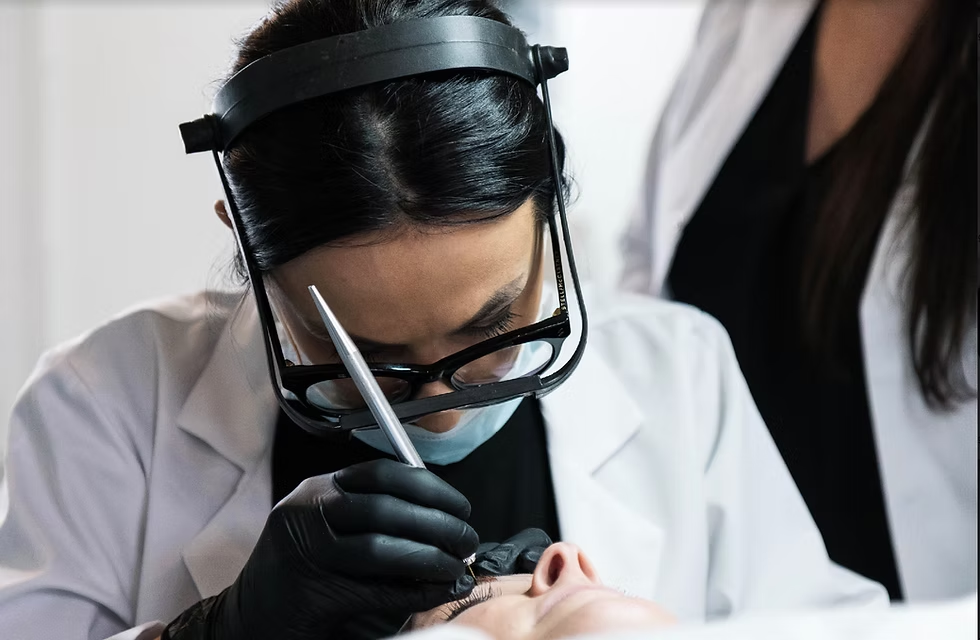
A proper trichology consultation includes a full medical history, family history, lifestyle review, hair pull test, scalp magnification, and where indicated, microscopy and blood tests. It takes 45 to 60 minutes. Anyone offering you a treatment plan after a 10-minute chat hasn't diagnosed you. They've sold you something.
2. PRP therapy (Platelet-Rich Plasma)
PRP has one of the strongest evidence bases of any hair restoration treatment. A growing body of peer-reviewed research shows meaningful improvement in hair density, thickness, and growth rate over a 4-session, 16-week course. It uses your own blood plasma, which means an excellent safety profile and no risk of allergic reaction to a foreign substance.
What PRP does best: stimulating dormant or struggling hair follicles. It works particularly well for early to moderate-stage androgenetic hair loss and post-stress shedding.
What PRP can't do: regrow hair where the follicle has been completely lost. If you're asking about advanced baldness, PRP is not the right call. We'll tell you.
3. Minoxidil (topical)
Topical Minoxidil (the active ingredient in Regaine and the prescription-strength Rogaine) is one of only two treatments licensed by the FDA for androgenetic hair loss. It has decades of evidence. It works for most people who use it consistently. It also stops working when you stop using it.
Most of our hair restoration clients use a daily topical alongside their in-clinic programme. Compliance matters more than dose: a 2% Minoxidil applied every day consistently outperforms a 5% applied sporadically.
4. Mesotherapy
Hair mesotherapy delivers a clinical cocktail of vitamins, amino acids and DHT-blockers directly to the follicle level via microinjection. It bypasses the digestive system entirely, which means active ingredients reach the follicles at full strength.
The evidence is strong, particularly in combination with PRP or topical Minoxidil. It's our go-to for clients in the early stages of thinning or those recovering from a specific stressor.
5. Lifestyle (yes, really)
Iron stores below 70 ng/mL, vitamin D below 50 nmol/L, or protein intake below 1g per kg of body weight will quietly tank any treatment programme. A blood panel and an honest conversation about sleep, stress and nutrition is part of every consultation here. No supplement will save a thinning scalp on five hours of sleep and 60g of protein.
What doesn't work (or works less than promised)
1. Most "growth shampoos"
Shampoo sits on the scalp for under 60 seconds. No active ingredient meaningfully penetrates the follicle in that time. Growth shampoos with caffeine, biotin, or "follicle-stimulating peptides" are at best a small adjunct to a proper programme. They are not a treatment.
2. Oral biotin (for most people)
Biotin deficiency causes hair loss. But genuine biotin deficiency is rare in adults with a balanced diet. Supplementing biotin when you're not deficient does nothing for your hair. It does, however, skew thyroid blood test results, which is a problem worth knowing.
3. Scalp massage as a standalone treatment
A small study showed scalp massage improved hair thickness in healthy young men. Adopting it as part of your routine costs nothing and may help. But it is not a treatment for active hair loss, and we don't recommend pinning your hopes on it.
4. Stem-cell anything (as currently marketed)
The science is genuinely promising. The commercial reality is twenty years away. Anyone selling "stem cell hair regeneration" today is selling something that isn't yet what they're claiming. Save your money.
5. Single-session "miracle" treatments
Hair grows on a 12 to 16 week cycle. Any meaningful improvement in density requires multiple sessions over at least one full hair cycle. Anyone promising a transformation from one appointment isn't telling you the truth.
How to choose a clinic
Five questions worth asking:
- Will you take a full medical history before recommending treatment?
- Will you conduct a clinical scalp analysis?
- Will you tell me if a treatment isn't right for me?
- Will you put my treatment plan in writing?
- What's your honest expectation for results, in weeks?
If the answers feel vague, walk out.
The honest summary
Effective hair restoration is unglamorous. It needs a proper diagnosis, a clinically grounded plan, consistency over months, lifestyle support, and a practitioner honest enough to tell you what won't work.
If your hair concerns are bothering you, please book a consultation. We'll tell you exactly where you stand and whether what we offer is the right next step. If it isn't, we'll tell you that too.