Why permanent makeup ages badly: the skin cup theory explained.
On the ceiling of what the skin can carry, the three ways practitioners overfill it, and the corrective pathway that lets a restoration age beautifully.
If your permanent makeup used to look beautiful and no longer does, the problem is almost never a single bad session. It is that too much cosmetic pigment has accumulated in the skin over time. Everything else, the muddy colour, the softened strokes, the shape that has quietly drifted, sits on top of that one clinical fact. This is the mental model I teach every practitioner who trains with me and one of the first things I explain in a restoration consultation at Little London Clinic in Royal Leamington Spa. I call it the skin cup theory, and it is the single most useful frame for understanding why old permanent makeup ages badly, when PMU laser removal is genuinely needed, and how to plan a restoration that will still look considered fifteen years from now.
This piece walks through the theory, the biology behind it, the three most common reasons practitioners overfill the cup, the diagnostic questions we ask at consultation, and the specific way a corrective pathway (removal, settle, rebuild) is planned at the clinic. It is written for anyone in Warwickshire (or further afield) who is quietly unhappy with existing brow, lash or lip work and does not know whether they need a colour boost, a redo, or a full course of removal.
The skin cup theory: why cosmetic pigment has a ceiling
Every area of skin has a finite capacity for cosmetic pigment. Whether it is a brow, a lash line or a lip, the skin can only hold so much ink before it starts to look wrong. It is not about how good the artist is on the day. It is about the ceiling of what the skin can carry.
Think of that ceiling as the top of a cup. Every microblading appointment, every hairstroke session, every colour boost adds to the level in that cup. Some pigment fades and is cleared by the body over time, which lowers the level. New work raises it. Old work you cannot clearly see on the surface is still in there, taking up space.
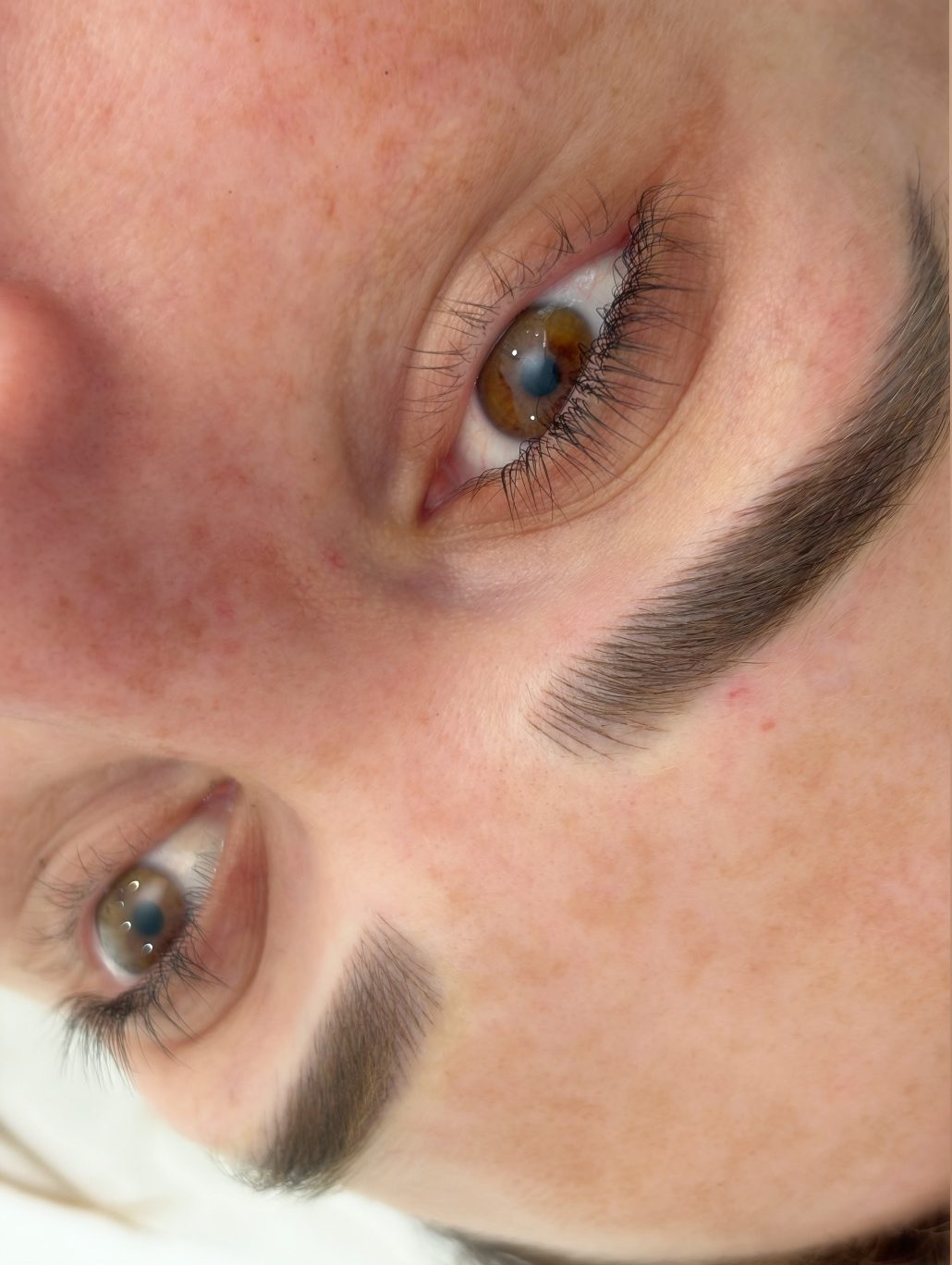
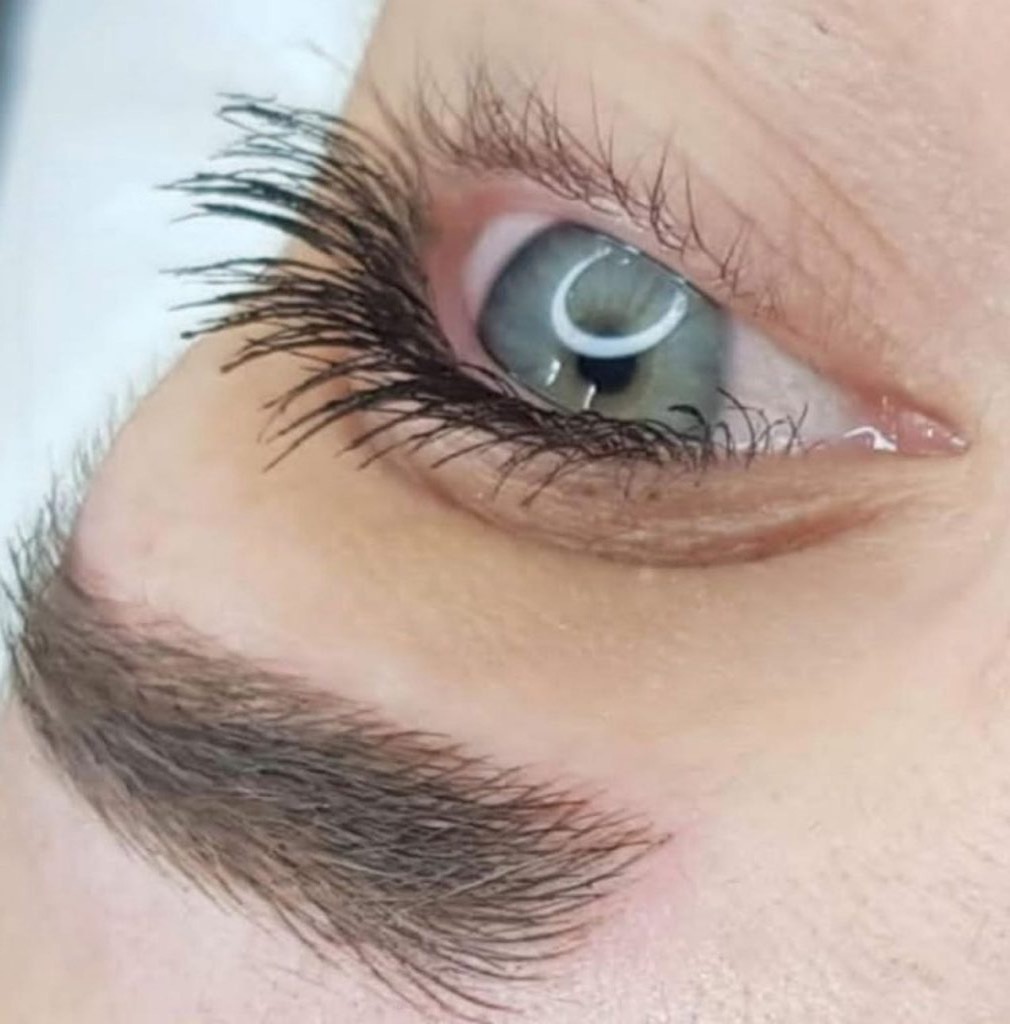
Beautiful restoration lives on the safe side of that line. Once the skin exceeds the capacity, no amount of skill can hide it. The colour reads muddy, often shifting to a cool blue or green undertone as pigment migrates. Hairstroke definition softens into shading. The shape drifts. It just looks like too much ink in the skin.
The biology: how pigment is actually held in the skin
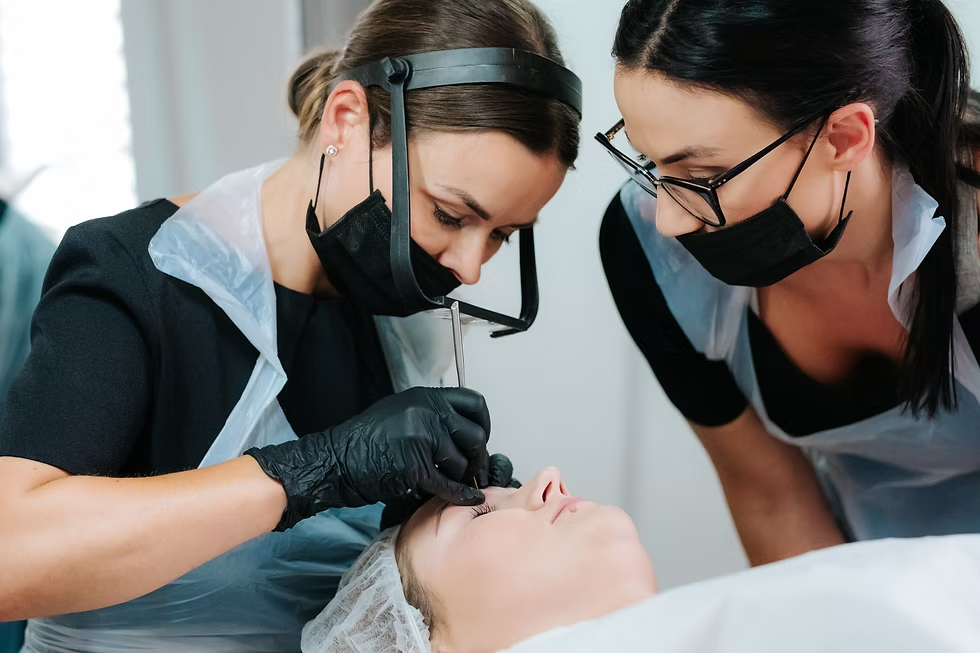
To understand why the ceiling exists, it helps to know where cosmetic pigment actually lives. Modern permanent makeup (also called micropigmentation or cosmetic tattooing) deposits pigment into the upper dermis, typically between 0.5 and 1.5 millimetres deep depending on the technique and the area. The pigment particles are far larger than the ink used in traditional tattooing, which is why the fade is more gradual and the colour retention is more variable.
Once deposited, some of the pigment is engulfed by immune cells (macrophages) and held in place. A smaller amount is cleared by the lymphatic system over months and years. A third portion migrates slightly within the dermal layer, which is what causes some of the softening of hairstroke definition over time.
Each new session adds to the total load of pigment particles held in that patch of skin. There is no biological mechanism that says "you are full, no more pigment can be added here", so the artist has to make that judgement clinically. This is what makes practitioner training in reading loaded skin so important, and why it is on the curriculum in every practitioner training programme we run at Little London Clinic.
How skin type affects the cup: not everyone has the same capacity
The overall size of the "cup" varies significantly by skin type. Broadly:
- Oilier, thicker skin retains less pigment per session, appears to fade faster, but often holds a higher total load over time. The cup is deeper but empties faster.
- Drier, thinner skin retains pigment beautifully on day one, fades slowly, but reaches capacity with fewer sessions. The cup is smaller and empties slower.
- Mature skin (menopausal and post-menopausal, and skin thinned by long-term topical steroid use) holds pigment less predictably and often shows early migration.
- Skin with a history of medical hair loss (alopecia, post-chemo) can be either more or less receptive depending on the underlying cause. This is one of the reasons a medical history is essential at consultation.
None of this is visible from a photograph. It is felt during a consultation, assessed at pencil mapping, and confirmed on the first hand-drawn stroke. It is why every restoration client at the clinic gets a proper diagnostic consultation before pigment is booked.
Why permanent makeup ages badly (three common reasons)
Most permanent makeup that ages badly does so for one of three reasons, all of which come back to the cup being overfilled.
1. Competitive pressure at the first appointment
The client walks in, they have seen bold brows on social media, they want the result to look defined immediately. The temptation for the practitioner to deposit more pigment on session one is real. It is the shortest path to a happy day-one photograph. It is also the fastest path to an unhappy year-two result.
2. Missing the history in the skin
A client rarely walks in with a truly blank canvas. Old cosmetic pigment, ghost strokes from work done ten years ago, colour boosts stacked on top of colour boosts, all of it is still there. If a practitioner does not audit the history properly at consultation, they treat a full cup as an empty one and pour more in.
3. Lack of professional restraint
Restraint is the hardest professional skill to develop. It is much easier to add than it is to under-do. The best brow and lash line restoration artists deliberately underdraw on the first session, knowing they can add at the 6-week perfecting session if the client genuinely wants more. Most do not.
The rule I work by at Little London Clinic
You want the cup to be nearly full, not overflowing. Once it is at capacity, you have to take some out before you add any more in.
The moment I judge that a client's skin is at or beyond capacity, no new work is added on that visit. Not a stroke. Not a colour boost. The next step is a course of PMU laser removal to lift some of what is in the skin, followed by a considered rebuild on the settled skin around twelve weeks later.
This is why PMU laser removal is a sideline treatment at the clinic rather than a headline one. It is not the goal. It is the specific tool that makes a beautiful restoration possible when the cup is already full. Whoever you see, ask about their qualifications, their insurance and their healed results before anything begins.
What honest, cup-aware restoration looks like in practice
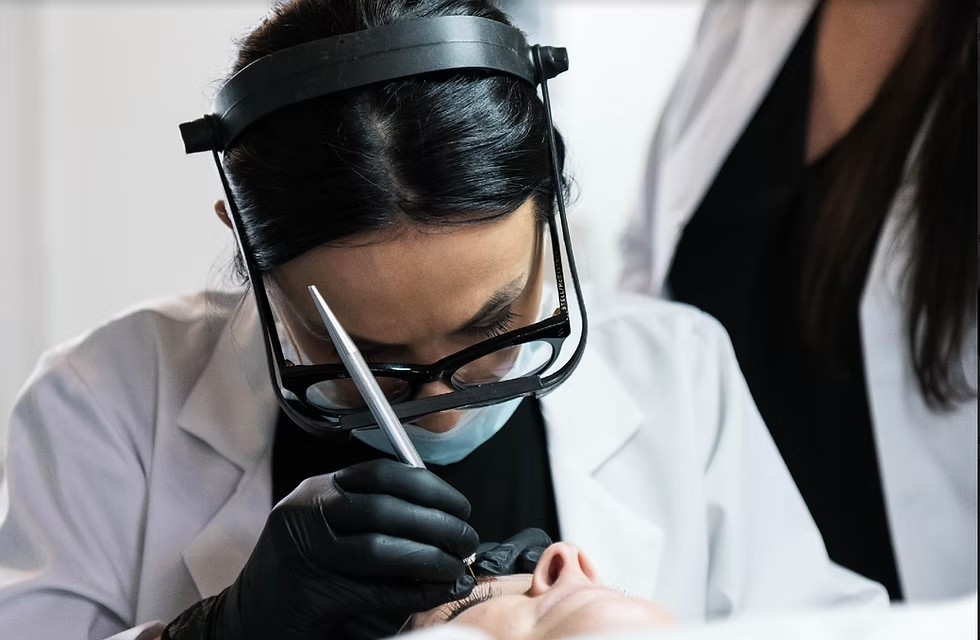
A cup-aware appointment looks like a slower initial visit. A pencil mapping that takes thirty minutes because the shape has to honour both the face and what is already in the skin. A first session that reads as slightly understated in the mirror on day one. A perfecting session at week six where we might add five or ten percent more, if the client genuinely wants it.
For clients coming in with a heavy history of old work: it looks like an honest conversation about a course of PMU laser removal before we can even discuss a new restoration. Sometimes three sessions of removal is enough to lift the level. Sometimes six. Sometimes we conclude that a full fade is the right answer and no new pigment is added at all.
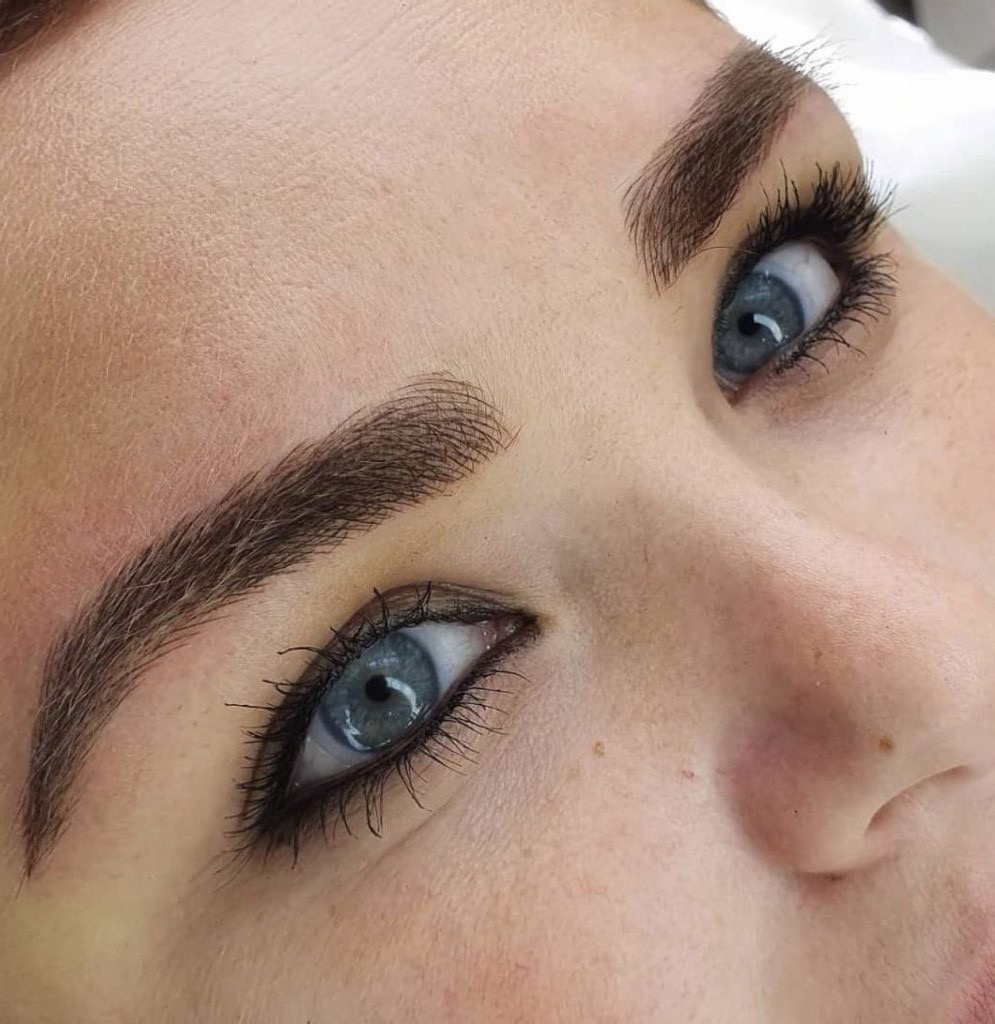
The result, in every case, is restoration that ages beautifully. The hairstrokes stay defined. The colour stays warm rather than shifting cool. The skin has enough headroom to handle the natural fade and settlement of pigment across twelve to eighteen months without the shape or the colour deteriorating.
Signs your cup may be overfilled (self-diagnostic)
You will not know from a single photograph, and you cannot fully diagnose it in the mirror at home. What you can notice, though, are the surface signs that usually correlate with an over-filled cup:
- The colour of your brow work has drifted from warm brown to cool grey, blue or green.
- Definition between the individual hairstrokes has softened into a shaded block.
- The shape of the brow feels wider, longer or heavier than it did at the start.
- Colour boosts are fading faster and faster after each fresh session.
- A previous practitioner has suggested a "correction session" more than once.
- You have had five or more brow appointments in the same area across the last decade.
Any two or more of these usually means the cup is at or above the ceiling. A proper diagnostic consultation confirms it either way, and lets us plan removal + rebuild as a single considered pathway rather than two separate purchases.
The removal + rebuild pathway: how a corrective course actually runs
For clients who are clearly at or beyond the ceiling, the pathway follows a predictable shape:
- Diagnostic consultation (30 minutes). Full history, skin assessment, honest read of where the cup sits, and a written plan.
- PMU laser removal, session one. Patch test complete, first treatment on the whole affected area. Immediate fade over 6 to 8 weeks as the body clears fragmented pigment.
- PMU laser removal, sessions two to six. Repeated on a 6 to 8 week cycle until the pigment level in the skin has fallen to a safe working level.
- Settle window (12 weeks). No treatment. The skin fully recovers before any new pigment is deposited.
- Restoration mapping and pigment application. A new hairstroke or combination brow restoration is drawn, confirmed and applied on the settled skin.
- Perfecting session (6 weeks after restoration). Small refinements to shape and colour, if wanted. Included as standard.
Total time from the first consultation to a perfectly healed new brow, for a typical case, is somewhere between eight and twelve months. For clients coming in with lighter existing work, the pathway is shorter and the removal count is lower. For heavier or older work, the removal count can rise to six or eight sessions before we start rebuilding.
You can see the full pricing structure for each stage on our packages and pricing page, or see real healed work in our results gallery.
How to choose a practitioner: one question that matters most
The most important question you can ask any brow, lash or restoration practitioner is not about their portfolio or their technique. It is about how they audit what is already in your skin.
A practitioner who cannot tell you, at consultation, roughly where your skin sits on the capacity scale is a practitioner who is about to add to it without knowing how full the cup already is. That is where bad results come from. Not from a bad day, or a wrong colour choice, or a slip of the hand. From ignoring the ceiling.
Ask them. Ask about their approach to old work, their view on removal, and whether they will underdraw on the first session. If the answers are thin, book with someone else. Recognised qualifications, full insurance and a portfolio of healed results, not just fresh ones, are a good starting bar to look for.
The trainer's note: what practitioners get wrong most often
This section is written for anyone in the industry reading this, whether you are a PMU artist, an aesthetic nurse, or a practitioner considering our practitioner training programme.
The single most common technical error I see when auditing a colleague's recent work is deposit depth. Cosmetic pigment sits too deep is difficult to remove and ages into a spread, blurred zone. Sits too shallow it fades faster than it should and the client returns for boosts sooner than they need to.
The correct depth for hairstroke work sits in the upper reticular dermis, usually around 0.5 to 0.8 millimetres. The correct depth for shading is fractionally deeper. Depth is not a static number, it is a real-time judgement made by feel, by resistance, by the pattern of pigment showing during the pass. It is the hardest thing to teach and the thing that separates a considered artist from a technical one.
Cup management is the second most common gap. Even excellent-depth artists overfill the cup by working with a plan that ignores what was there before. The audit at consultation is not optional. It is the foundation everything else sits on.

How we approach this at Little London Clinic
Every restoration consultation at the clinic begins with a proper audit of what is already in the skin. If the cup has room, we add carefully, one considered layer at a time. If the cup is close to capacity, we tell you honestly. If the cup has overflowed, we plan PMU laser removal first and a new restoration second, twelve weeks after the skin has fully settled.
Located at 4 George Street in Royal Leamington Spa, we work with clients across Warwickshire, from Warwick and Kenilworth through Stratford-upon-Avon, Coventry and the surrounding villages. It is a slower path. It is often the more expensive one in the short run. It is always the right one over the long run of the ten, fifteen or twenty years a client will wear the work.
Frequently asked
Why does my old permanent makeup look grey or blue now?
When cosmetic pigment stays in the skin beyond the level it was designed to fade at, or when it is layered onto older work, warm undertones fade first and cooler undertones migrate to the surface. It usually points to either poor original pigment selection or an over-filled cup.
Can I just have my old brow work covered up with new work?
Sometimes yes, often no. If the underlying pigment is close to the surface, cool-toned or misshapen, camouflaging with new work usually makes the ceiling worse and shortens how long the new work looks good. PMU laser removal first is often the more considered path.
How many PMU laser removal sessions will I need?
Between three and six, spaced six to eight weeks apart, is the typical range. Some pigment responds faster than others. We give a written estimate at consultation.
How long do I have to wait before starting a new restoration after removal?
Around 12 to 16 weeks after the final removal session, to let the skin fully settle. Rushing it risks reactivating pigment migration or scarring.
Is the cup theory the same for lip blush and lash liner?
Yes, the underlying principle is the same for every area. Capacity differs slightly by area, so lips, lash lines and brows each have their own scale, but the concept of a ceiling applies across all restoration work.
Is this backed by clinical research?
The cup analogy is a teaching shortcut for pigment saturation, which is a well-recognised concept in cosmetic tattoo dermatology. For guidance on aesthetic safety more broadly, the NHS overview of cosmetic procedures is a useful place to start.
Considering restoration or removal? Book a 30-minute diagnostic consultation with Zara at Little London Clinic in Royal Leamington Spa. We will look at your skin, discuss where you actually sit on the capacity scale, and give you an honest recommendation before we discuss anything else.